
PLC Applications in Industrial Sectors: Features, Advantages, and Brand Insights

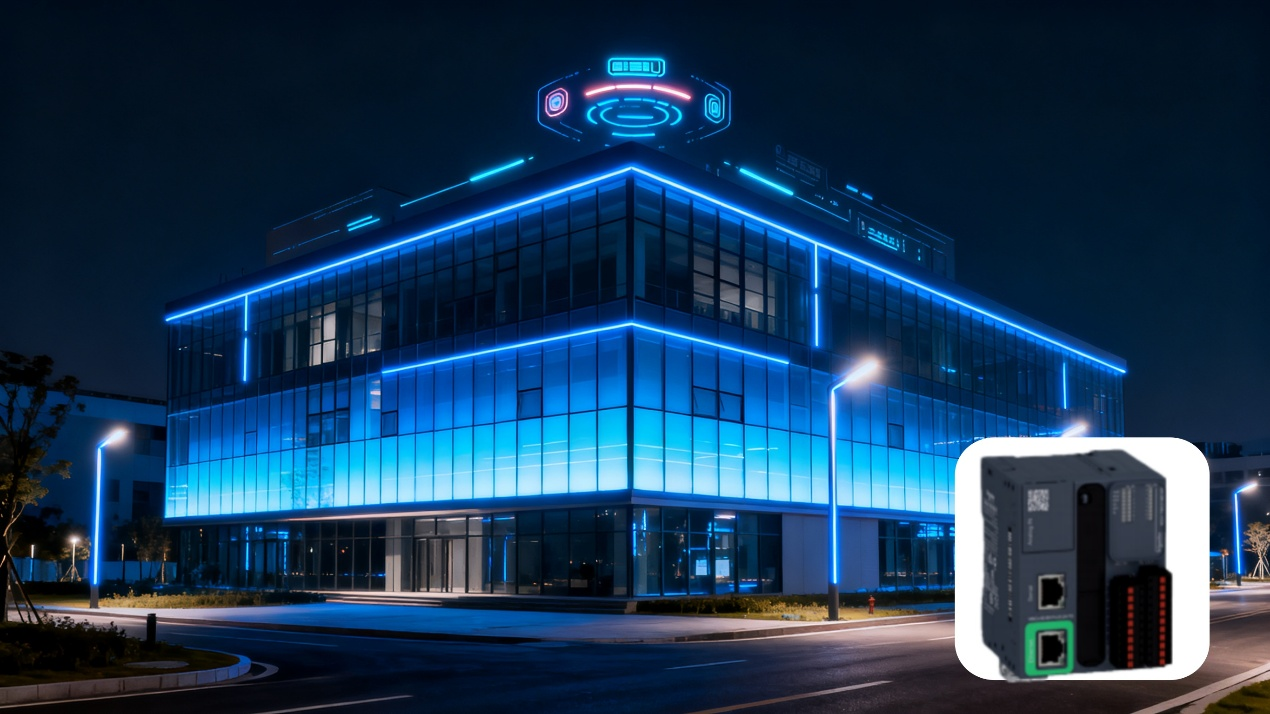
In the era of intelligent manufacturing and digital transformation, Programmable Logic Controllers (PLCs) have become the cornerstone of industrial automation. Whether in production lines, packaging machinery, wastewater treatment systems, or building management, PLCs function as the “brains” of automation — ensuring stability, precision, and efficiency across complex control processes.
I. Core Functions of PLCs
At their essence, PLCs are industrial-grade computing units designed to perform real-time control tasks.
They collect signals from sensors, process logical operations, and send commands to actuators, motors, or valves — forming the vital bridge between machinery and automation logic.
Compared with traditional relay control systems, modern PLCs offer significant advantages:
High reliability and interference resistance in harsh industrial environments;
Flexible programming and scalability, allowing for seamless expansion;
Integrated networking capabilities, enabling data sharing across production systems.
These attributes make PLCs indispensable in achieving intelligent, efficient, and connected manufacturing environments.
II. Leading PLC Brands and Their Distinct Strengths
1. Siemens Overview:
Siemens remains a global leader in industrial automation. Its S7 series is celebrated for superior stability, seamless system integration, and robust engineering tools.
Advantages:
Excellent compatibility with HMIs, drives, and industrial Ethernet;
Powerful engineering software (TIA Portal) for efficient configuration and diagnostics.
Disadvantages:
Relatively high cost;
Steeper learning curve for beginners.
Case Study: Yingke Wastewater Treatment Plant (Siemens S7-1500)
To modernize its operations, Yingke deployed S7-1500 PLCs for automated pump control, liquid-level monitoring, and remote supervision. Through Profinet networking, real-time data from field devices was transmitted to the control center, achieving fully unmanned operation.
Results:
Manual inspection frequency reduced by 60%;
Energy consumption decreased by approximately 15%.
2. Mitsubishi Electric
Overview:
Mitsubishi’s FX and Q series PLCs are known for speed, compact design, and cost-effectiveness, making them a preferred choice for packaging, assembly, and machinery control.
Advantages:
Fast processing and stable performance;
Reasonable pricing and wide industrial adoption.
Disadvantages:
Limited module expansion compared with premium competitors.
Case Study: Guangyi Food Factory Packaging Line (Mitsubishi FX5U)
The FX5U PLC managed conveyor belts, weighing units, and sealing machines, integrating high-speed I/O modules for precise motion synchronization.
Results:
Packaging efficiency increased by 20%;
Equipment failure rate dropped by 30%.
3. Schneider Electric
Overview:
Schneider’s Modicon series emphasizes open communication and modular architecture, ideal for flexible automation and smart building applications.
Advantages:
Supports multiple industrial communication protocols;
Easy integration into hybrid systems.
Disadvantages:Software ecosystem less extensive than Siemens or Mitsubishi.
Case Study: Chuangfeng Intelligent Building Lighting System (Modicon M221 + KNX)
By combining the M221 PLC with KNX bus technology, Chuangfeng’s system centralized control of lighting, HVAC, and blinds. Users managed the environment through touchscreens and mobile apps, achieving an optimal balance of comfort and energy efficiency.
Results:
Overall building energy consumption reduced by 18%.
III. Choosing the Right PLC for Your Project
There is no universally “best” PLC — only the one most suitable for your specific application. Consider the following factors:
1. System Complexity – Simple control tasks may only require a compact PLC, while complex process plants benefit from modular, networked systems.
2. Communication Requirements – Evaluate protocol compatibility (e.g., Modbus, Profibus, Profinet, EtherNet/IP).
3. Scalability & Maintenance – Ensure room for future expansion and support availability.
4. Cost vs. Performance Balance – Optimize investment without sacrificing reliability.
5. Brand Ecosystem – Match PLC choice with existing HMIs, drives, and software environments.
IV. The Future of PLCs in Industrial Automation
As industries evolve toward Industry 4.0, PLCs are no longer isolated controllers — they are integral nodes in intelligent, interconnected networks. Modern PLCs incorporate IoT connectivity, edge computing, and AI-driven diagnostics, empowering predictive maintenance and real-time decision-making.
From factory floors to smart buildings, PLCs continue to redefine automation with precision, efficiency, and intelligence at every level.
✅ Key Takeaway
Whether you choose Siemens for robustness, Mitsubishi for responsiveness, or Schneider for flexibility, the key lies in aligning your PLC system with your process requirements and digital goals.
A well-chosen PLC doesn’t just control machines — it drives productivity, reliability, and innovation across your entire operation.